Quality Assured
Worldwide Shipping
Expert Support
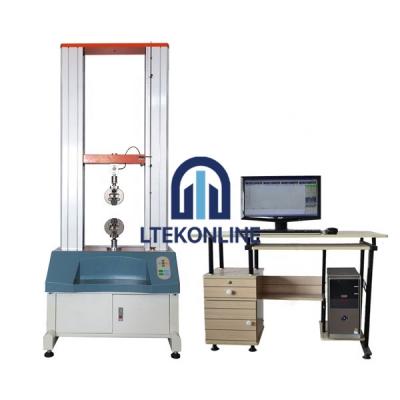
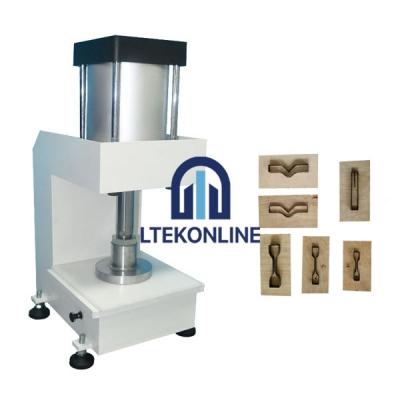
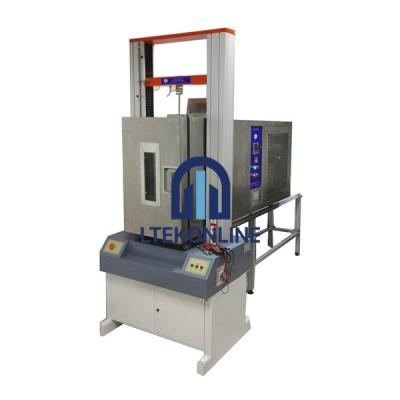
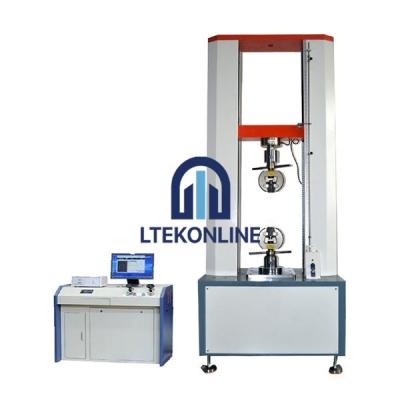
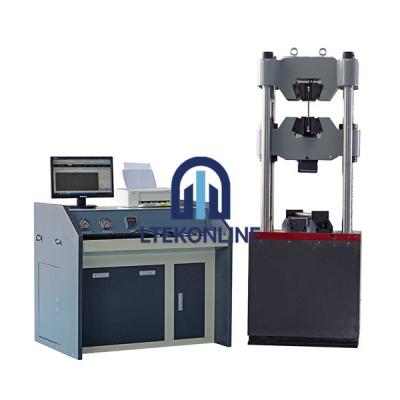
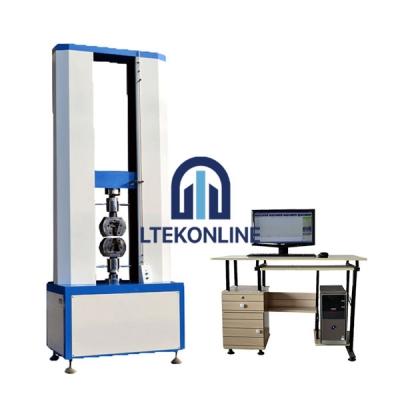
Universal Steel Bar 50 kn Bending Tensile Testing Machine
Description & Specification
Universal Steel Bar 50 kn Bending Tensile Testing Machine
Categories:
Universal Tensile Test Machine
Technical Specifications
Bend test machines are typically universal testing machines specially configured to evaluate material ductility, bend strength, fracture strength, and resistance to fracture. That said, bend test and flexure test terms are used interchangeably in the testing industry. A bend tester is configured to your requirements by our application engineers with a three or four point bend test fixture, the correct controller, and a deflectometer if you would like to measure sample deflection directly and accurately. Flexure tests are commonly associated with brittle materials including plastics, polymers, composites, glass and ceramics. Bend tests tend to be associated with ductile metals and metal products. Bend test equipment and test procedures are similar to flexure test equipment.
Specifications:
Frame capacity: 5T, 10T, 20T, 30T
Load accuracy: 0.5% F.S
Force reading: kgf, Ibf, N, KN, T etc
Vertical test space: 1100mm including fixture
Horizontal test space: ≤400mm
Test speed: 0.1~300mm/min (adjustable)
Motor: Panasonic servo motor w/AC variable speed drive system, high-precision mechanical ball screw rod
Curves display: Load- elongation, Elongation-time, Time-elongation, Stress-strain
Data display: Max. force, speed, sample information, strength (Kpa, Mpa, N/mm, N/mm2) etc.
Safety features:
Load sensor with automatic retreat
Over-load protection: Upper and lower limit switches.