Quality Assured
Worldwide Shipping
Expert Support
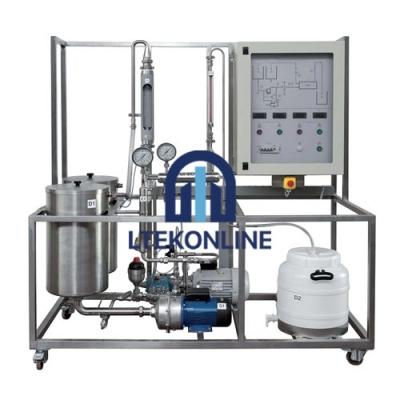
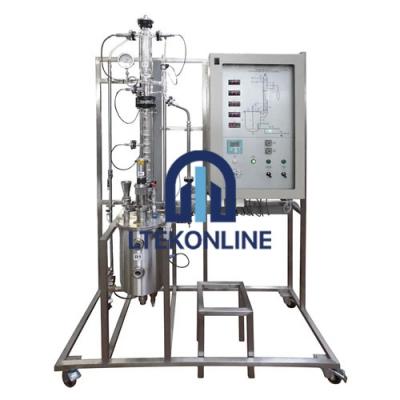
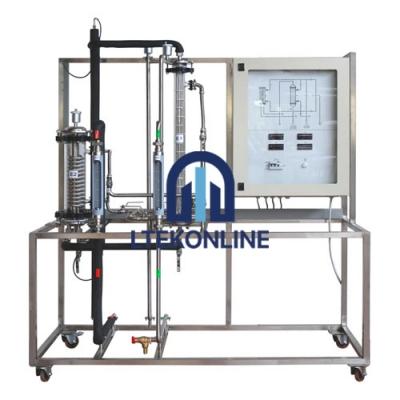
Biodiesel Production Pilot Plant
Description & Specification
Biodiesel Production Pilot Plant
Categories:
Chemical Engineering Lab Equipments
Technical Specifications
Biodiesel is a liquid fuel obtained by transesterification from renewable raw materials such as, for instance, vegetable oils or animal fats. If compared to fossil fuels, this type of fuel offers a lot of advantages:
Reduction of dust emissions down to 50%
Absence of benzene and of other carcinogenic components
Very low content of Sulphur (< 0.001%) that provokes the phenomenon of acid rains
It develops a closed loop of CO2 (the quantity of CO2 released by its combustion is equal to that absorbed by plants from the air during their growing process).
As it has a high flash point, it is not classified as dangerous material, consequently it can be handled easily and safely
High biodegradation.
High lubricating power.
Training Program:
This unit enables to deepen the following issues:
Separation of glycerine
Transesterification of a vegetable oil
Restoring methanol.
Washing of biodiesel.
Technical Specifications:
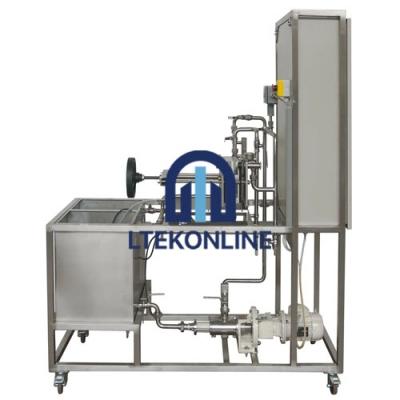
Multi-function reactor of borosilicate glass and stainless steel, with capacity of 18 litres, equipped with motor-driven stirrer and condenser.
Framework of Stainless Steel with Castors.
Tank of borosilicate glass and stainless steel for reagent/catalyst, including stirring system.
2 restoring tanks of borosilicate glass.
Heating system by electric heaters, provided with thermostat.